When you work at ess Compass Group, every pay period you receive a document called a ESS Compass associate com paystub. This paper or digital record shows how much you earn, what is deducted, and the amount you finally take home. Understanding it helps you confirm your earnings and keep your finances in order.
What Is a ESS Compass Mobile Pay Stub?
A pay stub (also known as a paycheck statement or salary slip) lists the complete breakdown of your income for a given period.
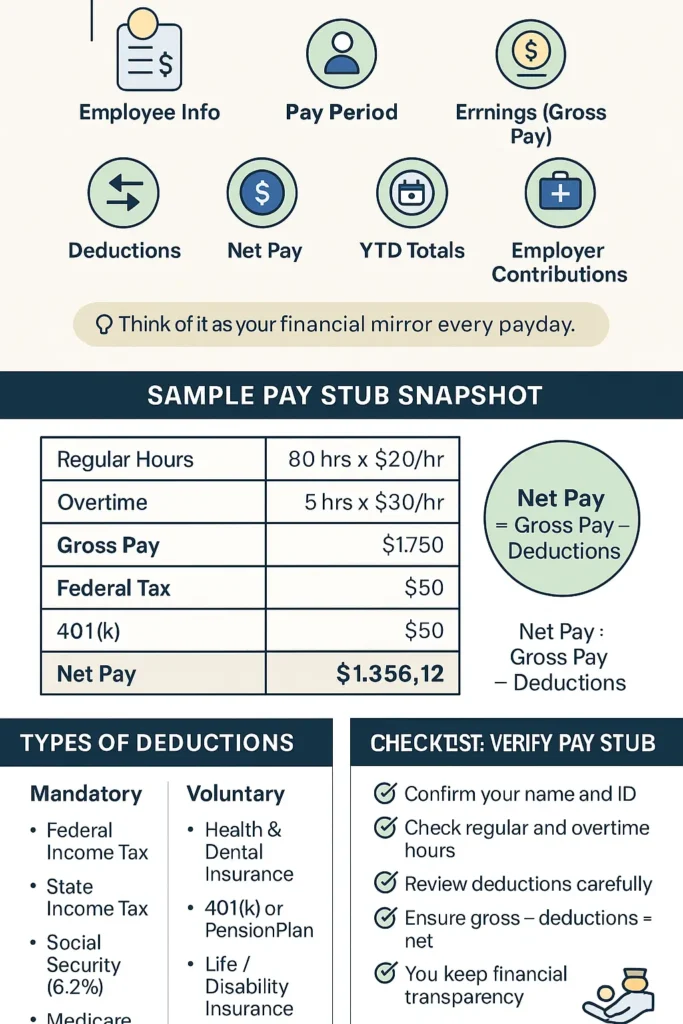
- Gross pay before deductions
- Taxes and benefits deducted
- Net pay (the final amount you receive)
- Year-to-date (YTD) totals for each category
For Compass Associates, pay stubs are provided through the ESS — Employee Self Service system. This system records every paycheck so that associates can view their earnings in detail.
Sections of the ESS Compass Mobile Pay Stub
Each ESS Compass pay stub usually contains these parts.
- Employee information
- Pay period details
- Earnings or gross pay
- Deductions
- Net pay
- Year-to-date totals
- Employer contributions and notes
Let us go through each one clearly.
1. Employee Information
This section identifies you as the employee.
- Your name
- Employee ID
- Employer name (“Compass Group USA” or relevant division)
- Department or job title
- Pay frequency (bi-weekly, monthly, etc.)
It ensures that the record belongs to you and reflects your position.
2. Pay Period Information
This part shows the exact pay period — when you worked and when you get paid.
Example:
- Pay Period Start: September 1
- Pay Period End: September 15
- Pay Date: September 20
Compass associates typically follow a bi-weekly pay schedule, though some regional contracts may differ.
3. Earnings (Gross Pay)
Gross pay is everything you earn before deductions.
| Type of Earning | Description |
|---|---|
| Regular Pay | Normal hours multiplied by hourly rate |
| Overtime Pay | Extra hours worked beyond standard schedule |
| Holiday Pay | Bonus for working during holidays |
| Bonuses / Incentives | Extra payments for performance or milestones |
| Other Pay | Shift differential, allowances, etc. |
Example:
If you work 80 hours at $20/hour = $1,600.
Plus 5 overtime hours at $30/hour = $150.
Your gross pay = $1,750.
4. Deductions
Your employer must subtract certain amounts from gross pay before you get your net pay.
A. Mandatory Deductions
- Federal income tax
- State income tax
- Social Security (6.2 %)
- Medicare (1.45 %)
- Local or city tax (if applicable)
B. Voluntary Deductions
- Health, dental, or vision insurance premiums
- 401(k) or pension contributions
- Life or disability insurance
- Flexible spending or health savings accounts
- Union dues or garnishments
All deductions appear line-by-line with amounts or percentages.
5. Net Pay (Take-Home Pay)
This is your actual pay after all deductions.
Formula: Gross Pay – Total Deductions = Net Pay
Example:
Gross = $1,750 Deductions = $393.88 → Net = $1,356.12
This is the amount that arrives in your bank account through direct deposit or on your paycheck.
6. Year-to-Date (YTD) Totals
YTD totals show cumulative values from January 1 to the current pay period.
| Category | Meaning |
|---|---|
| YTD Gross Earnings | All earnings so far this year |
| YTD Taxes Withheld | Total federal, state, Social Security, Medicare deductions |
| YTD Benefits | Total benefits premiums paid |
| YTD Net Pay | Total money actually received |
These totals help you track annual income and prepare taxes accurately.
7. Employer Contributions and Notes
Compass Group often contributes to your benefits in addition to your deductions
- Employer share of medical or dental insurance
- Employer 401(k) match or pension contribution
- Life or disability coverage provided by the company
The bottom of the stub may include HR messages or benefit updates.
Example of a ESS Compass Associate Com Pay Stub Layout
| Section | Description | Example |
|---|---|---|
| Employee Name | Your full name | John Doe |
| Pay Period | Start 9/1 – End 9/15 | |
| Regular Hours | 80 hrs × $20/hr | $1,600 |
| Overtime | 5 hrs × $30/hr | $150 |
| Gross Pay | $1,750 | |
| Federal Tax | $150 | |
| Social Security | $108.50 | |
| Medicare | $25.38 | |
| Health Insurance | $60 | |
| 401(k) | $50 | |
| Total Deductions | $393.88 | |
| Net Pay | $1,356.12 | |
| YTD Gross | $28,000 | |
| YTD Net | $21,500 |
How to Verify Accuracy For ESS Compass Mobile Com Paystub?
- Check Hours and Rates — match your timecard.
- Confirm Overtime — ensure overtime hours are counted correctly.
- Review Deductions — verify each insurance or tax item.
- Ensure Math Accuracy — gross minus deductions equals net.
- Track YTD Growth — totals should increase logically each pay.
- Report Errors Promptly — contact payroll or HR with documents.
Why Understanding Pay Stubs Matters?
Knowing how to read your pay stub helps you.
- Confirm accurate pay each period.
- Identify wrong deductions early.
- Plan your monthly and yearly budgets.
- Keep proper tax and employment records.
- Understand employer benefits value.
This habit gives you financial control and confidence.
Variations Across Regions
Compass Group operates worldwide, so details may vary.
- Currency (USD, CAD, GBP, etc.)
- Local tax rates
- Benefit programs
- Pay cycle timing
- Formatting differences
Always read local HR or payroll notes that come with your stub.
Verified Compass Information
According to Compass Group USA documents:
- Employees access pay stubs through ESS or OMS systems.
- Pay stubs are secured PDFs, accessible with a passcode (made from SSN digits, birth month, and last name).
- Associates without network IDs can enroll through a separate online form.
- Only active associates can view pay stubs electronically.
(Source: Compass USA official PDF guides)
Best Practices for Compass Associates
- Keep copies (digital or printed) of all stubs.
- Compare each pay stub with your schedule and time records.
- Review deductions monthly.
- Keep benefit changes documented.
- Contact HR immediately if any figure looks wrong.
Consistency ensures long-term accuracy.
Common Questions
Q1. Why is my net pay lower this time?
Maybe new benefit deductions or tax adjustments apply this period.
Q2. What does YTD mean?
Year-to-Date — totals of your earnings and deductions since January 1.
Q3. What should I do if my hours are missing?
Check your timesheet and talk to your manager or payroll.
Q4. Why do deduction amounts change?
Changes in benefit plans, taxes, or wage rate can affect deductions.
Q5. How can I plan my budget using the pay stub?
Use your net pay as your reliable income figure for bills and savings.
Final Summary
Your ESS Compass Associate pay stub is more than just a slip of paper. It is a full financial record of your work and your benefits. Each line — from gross pay to deductions — tells part of your story as an employee. When you read it carefully, you make sure that every dollar you earn reaches you correctly and every deduction is accurate.
Always keep your pay stubs safe, review them often, and ask questions whenever something seems unclear. A well-understood pay stub helps you build trust with your employer and maintain your financial stability.